
Call Us Today:
800-666-7151
Modern Architectural GlazingModern Architectural GlazingModern Architectural GlazingModern Architectural Glazing
  • Home
  • Commercial
    • Windows
    • Commercial Glass Doors
    • Aluminum Storefront Systems
    • Aluminum Panels
    • Curtain Wall Systems
    • Architectural Glass & Glazing
    • Commercial Canopy
  • Residential
    • Windows
    • Doors
    • Glass Shower Enclosures
    • Seasonal Rooms & Enclosures
  • About Us
    • Blog & News
    • Projects
    • Careers
  • Clients
  • Request A Quote
  • Home
  • Commercial
    • Windows
    • Commercial Glass Doors
    • Aluminum Storefront Systems
    • Aluminum Panels
    • Curtain Wall Systems
    • Architectural Glass & Glazing
    • Commercial Canopy
  • Residential
    • Windows
    • Doors
    • Glass Shower Enclosures
    • Seasonal Rooms & Enclosures
  • About Us
    • Blog & News
    • Projects
    • Careers
  • Clients
  • Request A Quote
commercial glass doors, storefront glazing, glass storefront, glass window repair, curtain wall
May 16, 2025

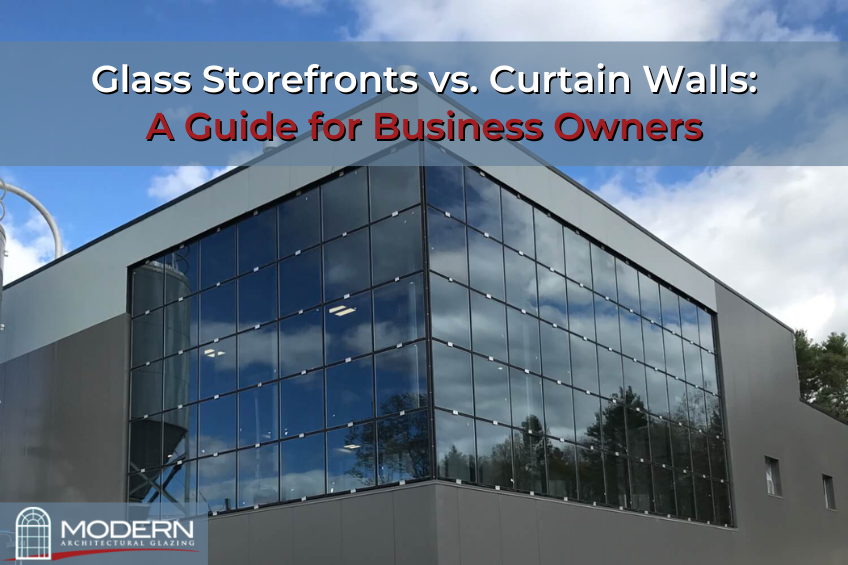
Glass Storefronts vs. Curtain Walls: A Guide for Business Owners

  • Posted By : modernadmin/
  • 0 comments /
  • Under : Aluminum Storefront Systems, Commercial Glass, Curtain Wall

As a business owner or real estate developer, making the right choice for your building’s façade is about more than just aesthetics—it’s about performance, durability, and creating a professional impression that aligns with your brand. That’s why understanding the difference between a glass storefront and a curtain wall system is critical when planning a new build or renovation.

Both options can completely transform how your building looks and functions. A glass storefront may be ideal for ground-level entrances or retail spaces looking to invite foot traffic with open, welcoming views. Meanwhile, curtain wall systems are engineered for scale, perfect for multi-story buildings that demand high performance in weather resistance, insulation, and long-term value.

Let’s take a closer look at how these systems compare—and which one might be the better fit for your next project.

What We’ll Cover:

  • Glass storefronts vs. curtain walls
  • Application
  • Performance
  • Water management
  • Cost
  • Longevity
  • Key takeaways

The Differences Between Glass Storefronts and Curtain Walls

Both types of commercial glass refer to a building or its façade when talking with architects and project managers. Both of these terms are architectural and connect to the exterior part of the building. Storefronts and curtain walls have similar functionality. They protect the interior features of the building and its occupants from harsh weather conditions. They also serve to ensure maximum sunshine and insulation from the outside.

Choosing between these two types of glazing solutions requires careful consideration of their attributes and how they align with your business needs. A professional glass installer can provide invaluable insights into which system—glass storefront or curtain wall—would best suit your specific requirements. Their expertise ensures that you not only choose the right type of commercial glass but also maximize its benefits in terms of energy efficiency, customer appeal, and brand coherence.

This guide will walk you through the core differences between these two popular commercial glass solutions. From cost and installation to performance and water management, we’ll help you weigh the pros and cons. And if you’re unsure which is right for your project, a professional architectural glazing partner like Modern Glazing can help assess your goals and recommend the best system for your needs.

1) Application

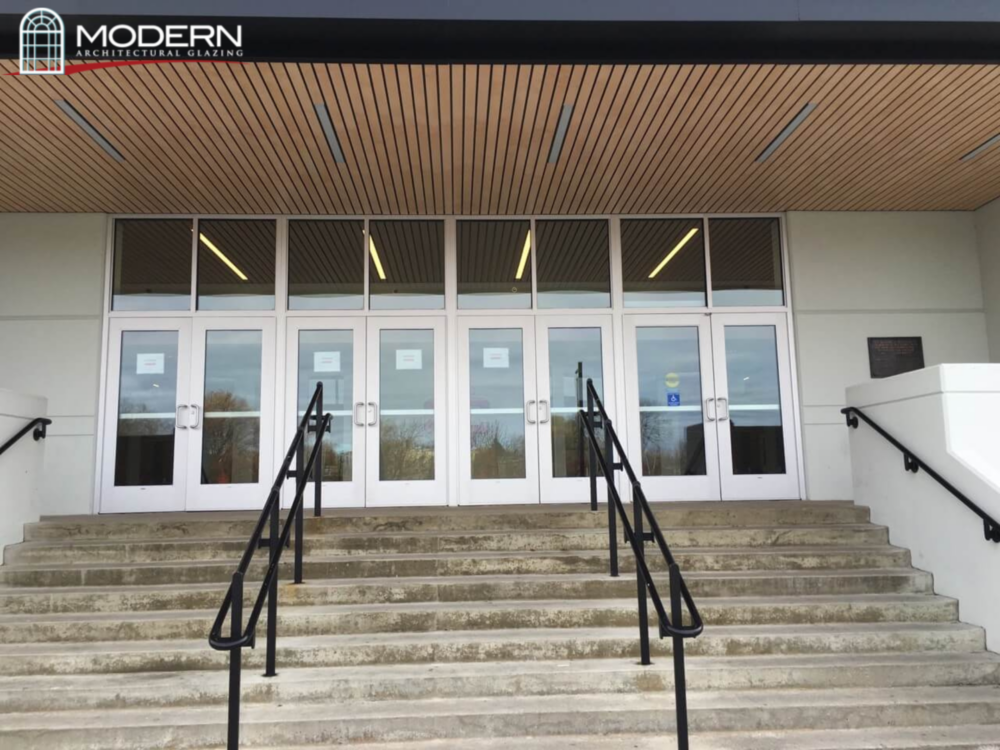
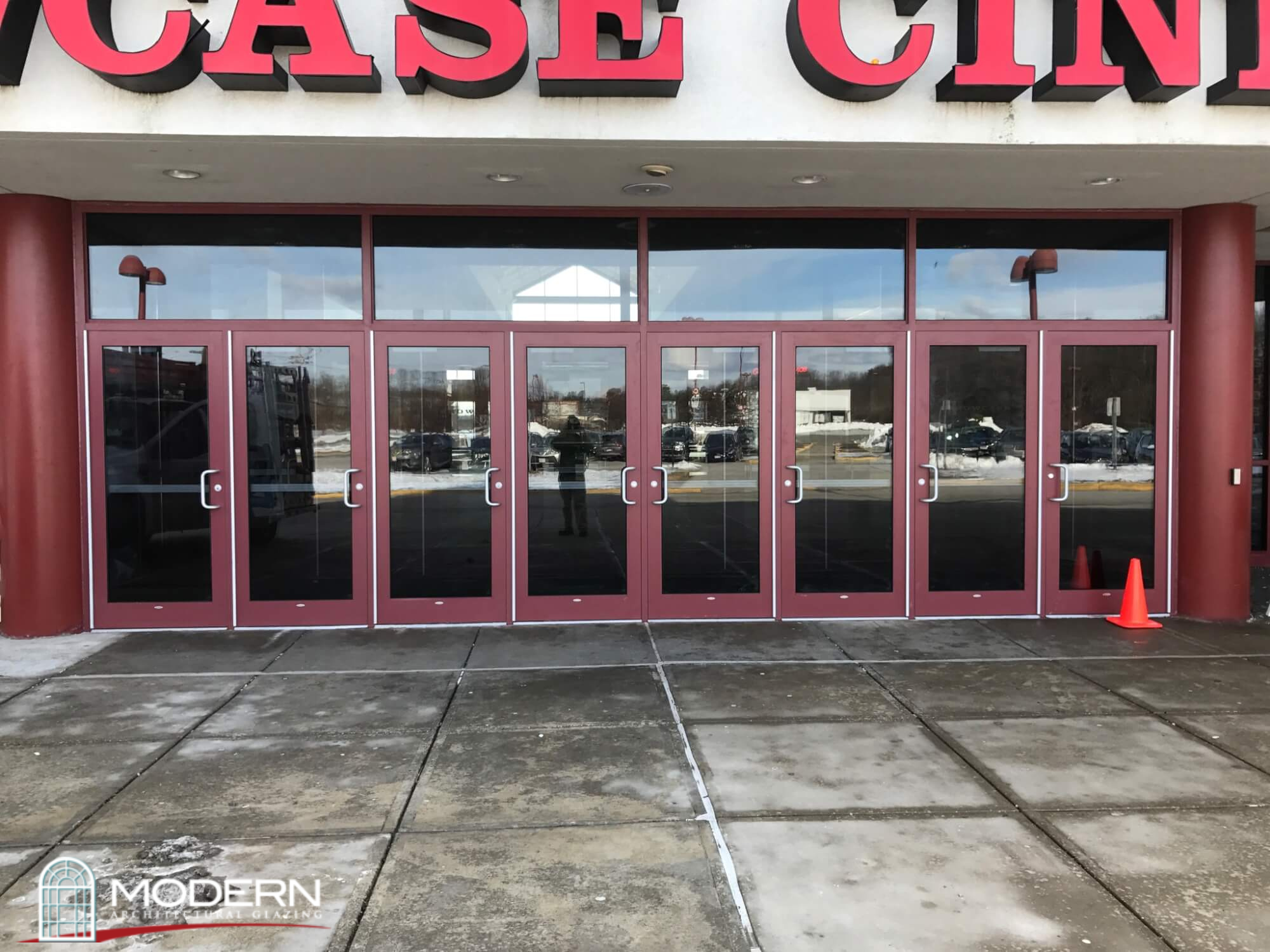
A glass storefront is a non-residential and non-load-bearing structure that serves as a business entrance framework with commercial windows. The typical range of storefront windows is 10 feet high or less, connected to the main entrance of its commercial glass doors.

Architects usually utilize storefronts for ground-floor structures. While designing a building, they may even employ storefronts for the second or third floor. The storefronts are focus-coated and not self-depleting.

On the other hand, curtain wall systems are non-load-bearing at the exterior wall that hang like curtains from all the floor sections. According to the plan of the building structure, these walls may rise higher than 25 feet. Usually, the walls range from different floors and are typically front-coated. It also comprises a self-depleting framework. 

Therefore, curtain walls are taller than storefronts. They are applicable in high-rise buildings, while storefronts are on ground floors or in low-rise buildings.
Glass Storefronts vs. Curtain Walls - A Guide for Business Owners - storefront glazing, glass storefront, storefront windows, storefront window replacement, aluminum storefront systems - Modern Glazing

2) Performance

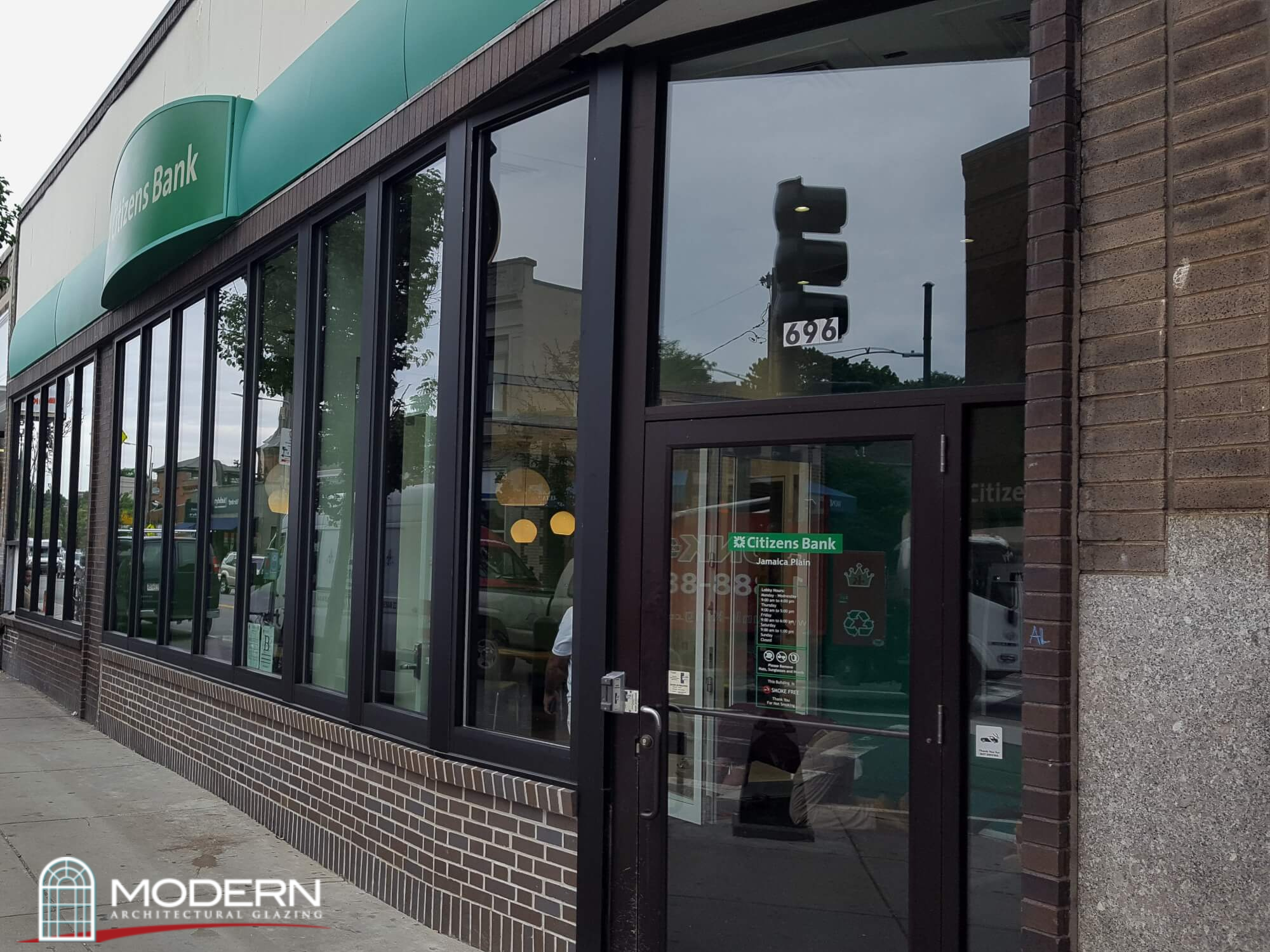
Another contrasting factor between storefronts and curtain walls is performance. Both architectural systems work in different ways at different heights. For example, storefronts will function well on ground levels. Structural silicones or glazing gaskets may only perform well in high-rise buildings when protected from weather elements.

These walls will also have higher air, water, and structural performance. Gaskets form the seal of the walls to keep air and moisture out. Moreover, on the higher floors, curtain walls function better. They come with unitized systems. These systems are fabricated and pre-assembled into units in the shop. Fabrication and pre-arrangement of curtain walls ensure that performance requirements are not subject to uncontrolled circumstances in the field.

In addition to this, the thermal performance of curtain walls is also much better than storefront glazing. It is significantly higher than the storefronts due to the attachment of a thermal break. The thermal break separates the pressure plate from the back members during commercial glass repair. Other features that enhance and improve the function of aluminum storefront systems include polyamide pressure plates, P&D parts, and polyamide struts.

Hence, the architectural systems are different in terms of performance and features, with curtain walls performing better in many ways.
Glass Storefronts vs. Curtain Walls - A Guide for Business Owners - storefront glazing, glass storefront, storefront windows, storefront window replacement, aluminum storefront systems - Modern Glazing

3) Water Management

Another critical difference between curtain walls and storefronts involves managing water in these systems. In a curtain wall, the weeping of each glass sill occurs separately.

Meanwhile, in a storefront system, the weeping of the whole storefront occurs at the sill. The system directs any amount of water entering the system towards the vertical mullion of the sill. Through the vertical mullion, weeping occurs through the outer part of the building. As a result, it can lead to the system becoming overloaded when the exposure to weather becomes excessive. For this reason, storefronts are typically lower in height.

As a result of its water management system, the system becomes overloaded as the exposure to weather increases. For this reason, the storefront has a limitation in height. Business owners should locate their commercial windows below the fourth floor for ideal sunlight and weather protection. In this way, weather elements may not disrupt the functionality of storefront windows.

Looking for the best commercial glass for
your business?

LEARN MORE

4) Cost

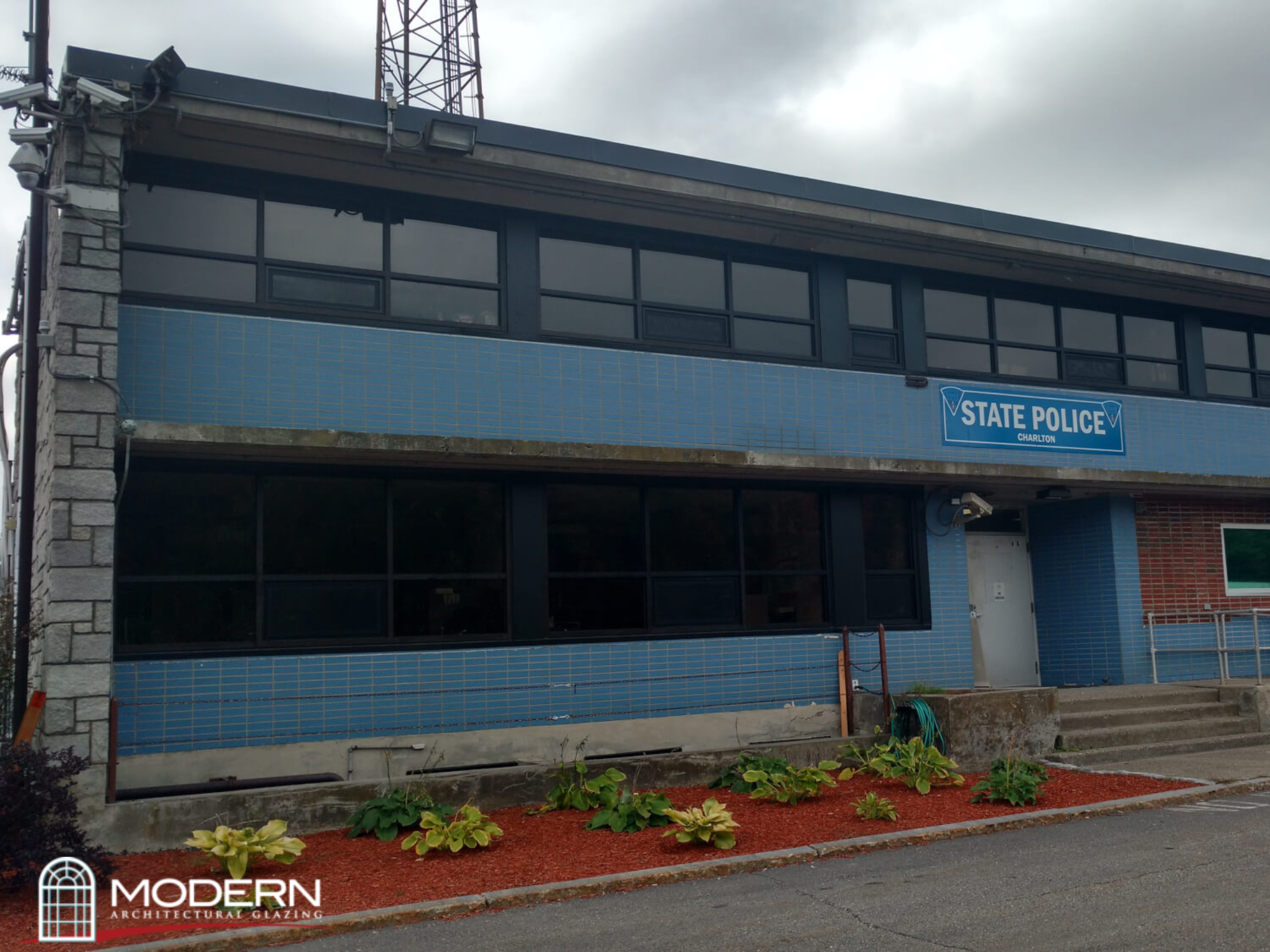
Costs linked with storefront glazing and curtain wall systems differ with various variations in the region due to the labor market. Typically, the storefront is less expensive and budget-friendly. These cheaper costs of storefronts are due to the different products and materials of preference for entrance and elevations on the first and second floors.

Curtain walls tend to be more expensive in material and labor. However, it enables architects and designers to enjoy higher flexibility in both design and performance. Other common aspects that affect the cost of both architectural structures may include the type of glass storefronts, aluminum storefront systems, or curtain walls. Your other material selections might include thermal break methods, finishing choices, and commercial canopies.
Glass Storefronts vs. Curtain Walls - A Guide for Business Owners - storefront glazing, glass storefront, storefront windows, storefront window replacement, aluminum storefront systems - Modern Glazing

5) Longevity

Storefronts and curtain walls differ significantly in terms of their longevity and durability. While both options provide robust solutions, the curtain wall typically outlasts its counterpart due to its superior resistance to harsh environmental conditions. The structural design of curtain walls allows for better thermal efficiency, which not only contributes to energy savings but also reduces the stress placed on the materials from temperature fluctuations. This precaution makes curtain walls particularly advantageous for high-rise buildings where exposure to elements is more significant.

Moreover, the materials and construction methods used in curtain wall systems are geared toward long-term sustainability and minimal maintenance. These systems are designed to withstand the rigors of time, providing a reliable barrier against weather-related wear and tear. Consequently, businesses can expect curtain walls to require fewer repairs and replacements over their lifespan, making them a cost-effective choice in the long run. The investment in a curtain wall system translates to less frequent needs for commercial glass repairs, lower maintenance costs, and greater overall value retention of the property.
Glass Storefronts vs. Curtain Walls - A Guide for Business Owners - storefront glazing, glass storefront, storefront windows, storefront window replacement, aluminum storefront systems - Modern Glazing

Key Takeaways

Curtain wall and storefront window replacement vary in performance, costs, duration, and water management. Some other internal factors also differentiate the curtain wall systems and storefront walls.

All in all, these are the critical differences between storefront glazing and curtain walls. Analyzing these differences can help you choose the best among various storefronts and curtain walls.

Choosing the better option may also differ according to the distinct requirements of the business owner and their business, including architectural needs, budget, and aesthetics.

In these cases, a glass installer service may come to your service to help you and ease the installation with efficiency and professionalism. At Modern Glazing, our glass installers ensure that your storefront window replacement stands out and looks unique.

Upgrade your business with
a new glass storefront!

GET A QUOTE

THE HIGHEST-RATED COMMERCIAL GLASS IN MA

At Modern Glazing, we offer an extensive portfolio of commercial glass to transform your business. As MA’s leading commercial glass company, we provide versatile, durable, and functional storefront window replacements for businesses of all sizes. Since 1952, we’ve built custom architectural glass installations all over New England. View our commercial glass portfolio today to see how Modern Glazing can renovate your storefront.

Your satisfaction is our priority. We perform a walk-through upon project completion to ensure you love every detail of your glass installation.

You can also follow us on Instagram for project updates to see our latest glass installations!

curtain wall system, commercial glass doors, storefront glazing, glass storefront, glass window repair, curtain wall
May 17, 2021

What Is A Curtain Wall System?

  • Posted By : modernadmin/
  • 0 comments /
  • Under : Curtain Wall

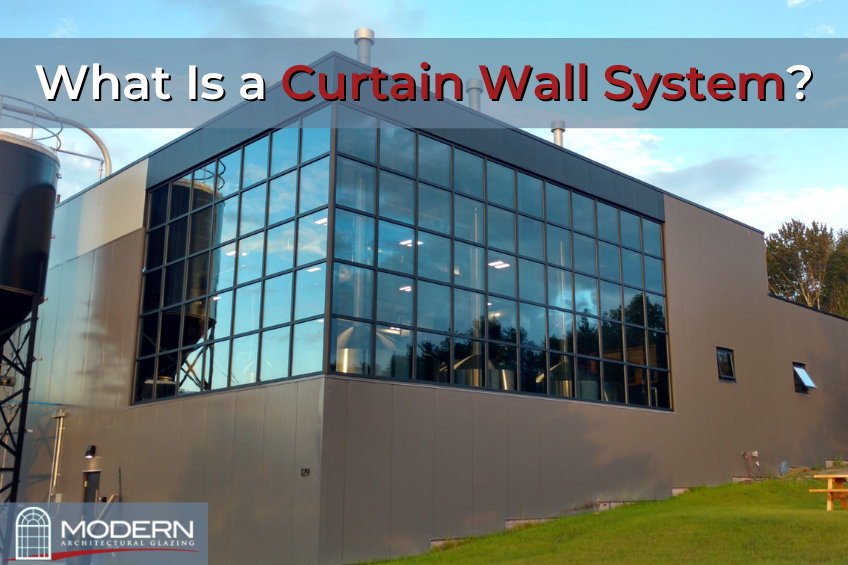
A curtain wall system serves as an external cladding for glass architecture and buildings with non-structural outer walls. Typically, a curtain wall system consists of aluminum-framed commercial glass or metal planes. The Curtain Wall System has been a distinctive feature of modern architecture and has been widely adopted commercially.

The rise in the adoption of the curtain walls has also given an immense boost to the businesses of glass manufacturers and commercial glaziers. It is one of the most sought-after glazing systems that adds to the aesthetic and robust design of the building and, commercially, offers a multitude of advantages.

What We’ll Cover:

  • Unitized/modular curtain wall systems
  • Stick-built curtain wall systems
  • Choosing the right curtain wall
  • 7 benefits of using a curtain wall system
  • Key takeaways
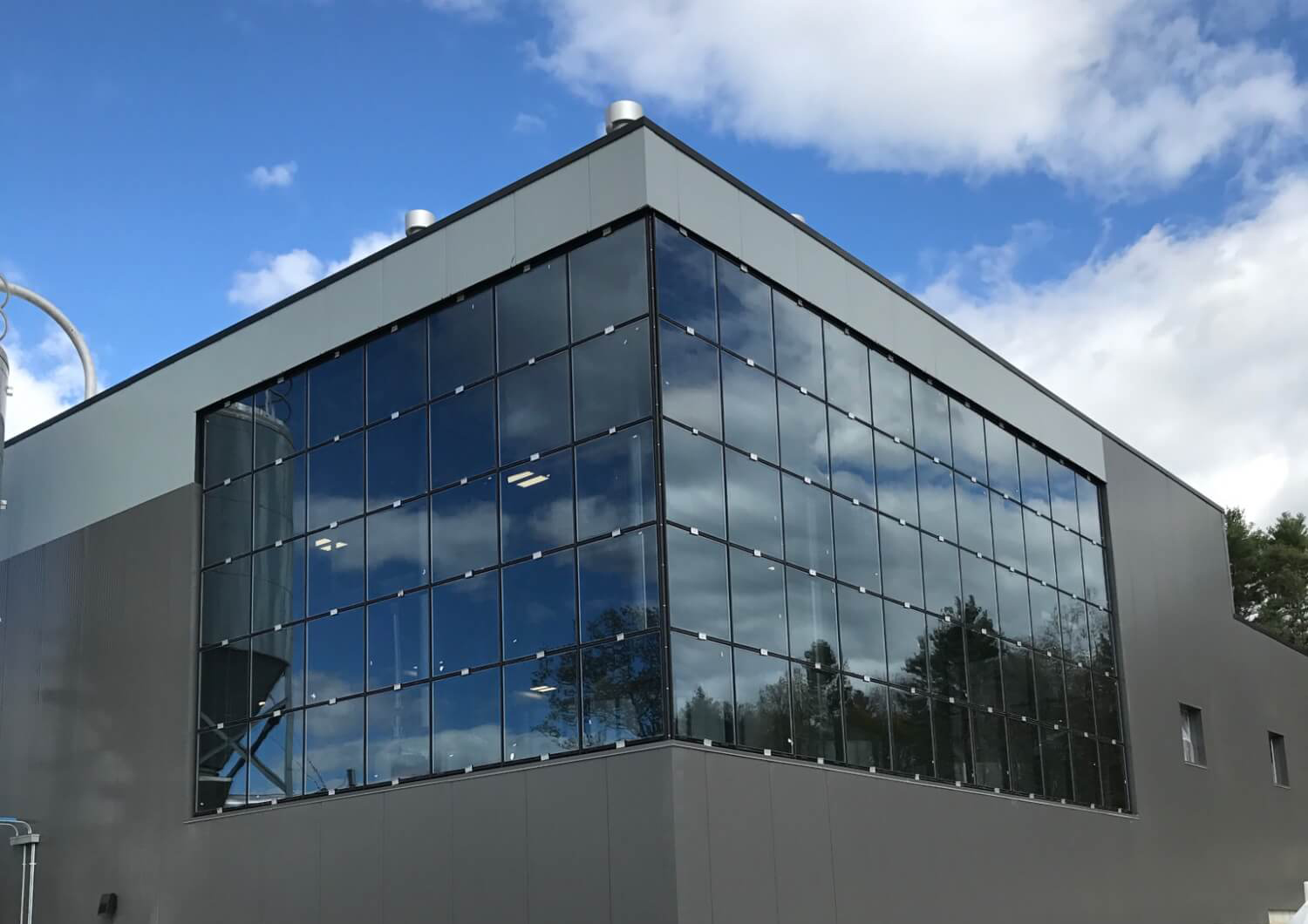
Curtain Wall System designed and constructed by Modern Glazing

What Are the Different Types of Curtain Wall Systems?

Not all curtain wall systems are built or installed the same way. In fact, the method used to fabricate and install a curtain wall can have a big impact on project timelines, costs, and overall performance. Most curtain wall systems fall into one of two main categories, each with its own advantages depending on the size and complexity of the building.

Unitized (or Modular) Curtain Wall Systems

Unitized curtain wall systems are fabricated and glazed off-site in a controlled factory environment. Large sections of the curtain wall are assembled into complete units before being delivered to the job site. Once they arrive, those units are lifted into place and attached to the building structure.

This approach is commonly used on mid-rise and high-rise buildings where speed, consistency, and performance are critical. Because so much of the work happens in the factory, on-site installation moves quickly and is less affected by weather delays. The controlled environment also allows for tighter quality control, which can improve air and water performance over time.

That said, unitized systems do come with trade-offs. Shipping large curtain wall units requires careful logistics, specialized transport, and sometimes escorted deliveries, which can increase freight costs. Still, for large projects with aggressive schedules, unitized systems often make sense because they reduce on-site labor and shorten overall construction time.

Stick-Built Curtain Wall Systems

Stick systems are assembled piece by piece directly on the job site. Individual components — such as mullions, anchors, and glass — are installed sequentially, with glazing happening after the framing is in place.

This method is often a good fit for smaller buildings, lower-rise projects, or sites with limited access where transporting large preassembled units would be impractical. Stick systems also offer more flexibility during installation, which can be helpful for renovations or buildings with unique architectural details.

However, because everything is installed on-site, stick systems typically take longer to complete and require more labor hours. Weather conditions can also affect installation schedules. On the plus side, shipping costs are usually lower since components are delivered in smaller, more manageable sections.

Choosing the Right System

There’s no one-size-fits-all answer when it comes to curtain wall systems. The right choice depends on factors like building height, project schedule, site access, budget, and performance requirements. An experienced commercial glazing partner can help evaluate these variables and recommend the system that best supports your project goals — both during construction and long after the building is complete.

Looking for the best glass doors for your business?

LEARN MORE

7 Commercial Benefits of Using a Curtain Wall System

Curtain wall systems have become a defining feature of modern commercial architecture—and for good reason. Beyond their clean, contemporary appearance, they offer measurable benefits that impact building performance, operating costs, and long-term value. That’s why architects, developers, and commercial glaziers regularly recommend curtain wall systems for offices, retail spaces, healthcare facilities, and large-scale developments.

Keep reading to learn some of the most important advantages businesses gain from installing a curtain wall system.

1) Strong Visual Impact and Curb Appeal

Curtain walls instantly elevate the exterior of a building. Their sleek glass façades create a polished, professional appearance that helps businesses make a strong first impression. For retail and office environments especially, this visual appeal can attract customers, tenants, and partners while reinforcing brand identity.

2) Durable, High-Performance Construction

Most curtain wall systems are built with aluminum framing, which offers an excellent balance of strength and weight. Aluminum resists corrosion, performs well in harsh weather, and maintains structural integrity over time. This durability helps extend the lifespan of the building envelope while minimizing long-term maintenance needs.

3) Design Flexibility and Customization

Curtain walls offer architects and developers significant design freedom. Aluminum framing can be fabricated into a wide range of shapes and configurations, allowing for custom layouts, unique sightlines, and branding-focused designs. Whether the goal is floor-to-ceiling glass or a mix of opaque and transparent panels, curtain wall systems can be tailored to meet specific project requirements.

curtain wall system, commercial glass doors, storefront glazing, glass storefront, glass window repair, curtain wall

4) Reduced Structural Load and Construction Costs

Because curtain walls are lightweight and non-load-bearing, they place less stress on the building’s structural framework. This can reduce overall construction costs and allow for more efficient structural design, especially in multi-story buildings.

5) Improved Energy Efficiency and Lower Utility Costs

Modern curtain wall systems are engineered to improve thermal performance. With insulated glass, thermal breaks, and advanced coatings, they help stabilize interior temperatures, reduce heat loss in winter, and limit heat gain in summer. This translates to lower heating, cooling, and lighting costs while also minimizing UV penetration that can damage interior finishes.

6) Enhanced Safety and Environmental Protection

Curtain wall systems are designed to resist wind loads, manage water infiltration, and block airborne pollutants. Many systems also incorporate fire-resistant and laminated glass options that help slow fire spread and enhance occupant safety during emergencies.

7) Brighter, More Comfortable Interiors

By maximizing natural daylight, curtain walls create brighter, more open interior spaces. This not only improves the visual appeal of the workplace but also contributes to a more comfortable and productive environment for employees and visitors.

In short, curtain wall systems offer far more than modern aesthetics—they provide performance, protection, and long-term value that make them a smart investment for commercial buildings of all sizes.

Key Takeaways

Curtain walls are an icon of contemporary architecture and render structural stability to the building. They can also function as a protection for your building model, keeping the interior safe and appeasing at the same time. Moreover, it can even gain business owners long-term commercial benefits, such as low maintenance costs and mitigating repair costs. In the long run, it can prove to be a cost-effective investment.  Hence, a curtain wall system can be a perfect addition to your business buildings and offices.

READY TO START YOUR NEXT GLASS PROJECT?

Get a Quote

THE HIGHEST-RATED CURTAIN WALL SYSTEMS IN MASSACHUSETTS

At Modern Glazing, we offer an extensive portfolio of commercial doors and entryways to make the most out of your storefront. As MA’s leading commercial glass company, we provide versatile, durable, and functional designs for glass storefronts. Since 1952, we’ve built custom commercial and architectural glass installations for businesses all over New England. View our commercial glass portfolio today to see how our architectural glass company can elevate your business.

Your satisfaction is our priority. We perform a walk-through upon project completion to ensure you love every detail of your glass installation.

You can also follow us on Instagram for project updates to see our latest glass installations!

Recent Posts
  • How to Repair Commercial Glass Doors
  • Top 6 Benefits of a Seasonal Sunroom Addition
  • Get the Most Out of Your Summer With a Screen Patio Enclosure
  • The Homeowner’s Complete Guide to Adding a Seasonal Sunroom
  • Glass Storefronts vs. Curtain Walls: A Guide for Business Owners
Categories
  • Aluminum Storefront Systems
  • Aluminum Windows
  • Architecture
  • Commercial Glass
  • Curtain Wall
  • Glass & Glazing
  • Glass Showers
  • Seasonal Rooms
ABOUT MODERN:

In 1952, Modern Manufacturing began as a storm door and window manufacturer. With the inception of Richard Uras as company President in the early 1980s, Modern expanded its focus into the growing replacement window market. Rick became the driving force behind Modern’s push into the commercial storefront and architectural restoration market, and so began Modern Architectural Glazing. Rick’s unrelenting pursuit of quality work and customer satisfaction is what continues to drive the company in the Modern Age.

CONTACT US:

Address
82 Huntoon Memorial Highway,
Rochdale, MA 01542

Phone:
508-791-7151
800-666-7151

Email:
estimating@modernglazing.com

Showroom Hours:
Monday-Friday: 8 AM – 4:30 PM

WE’RE HIRING!

We’re always looking for talented individuals to join our team!

VIEW OPEN POSITIONS
RECENT BLOGS:
  • How to Repair Commercial Glass Doors
  • Top 6 Benefits of a Seasonal Sunroom Addition
  • Get the Most Out of Your Summer With a Screen Patio Enclosure
  • The Homeowner’s Complete Guide to Adding a Seasonal Sunroom
  • Glass Storefronts vs. Curtain Walls: A Guide for Business Owners
  • How to Find the Best Glass Installation Company Near Me
Copyright © Modern Architectural Glazing, 2025
Powered by Worcester Interactive