

Call Us Today:
800-666-7151
Modern Architectural GlazingModern Architectural GlazingModern Architectural GlazingModern Architectural Glazing
  • Home
  • Commercial
    • Windows
    • Commercial Glass Doors
    • Aluminum Storefront Systems
    • Aluminum Panels
    • Curtain Wall Systems
    • Architectural Glass & Glazing
    • Commercial Canopy
  • Residential
    • Windows
    • Doors
    • Glass Shower Enclosures
    • Seasonal Rooms & Enclosures
  • About Us
    • Blog & News
    • Projects
    • Careers
  • Clients
  • Request A Quote
  • Home
  • Commercial
    • Windows
    • Commercial Glass Doors
    • Aluminum Storefront Systems
    • Aluminum Panels
    • Curtain Wall Systems
    • Architectural Glass & Glazing
    • Commercial Canopy
  • Residential
    • Windows
    • Doors
    • Glass Shower Enclosures
    • Seasonal Rooms & Enclosures
  • About Us
    • Blog & News
    • Projects
    • Careers
  • Clients
  • Request A Quote
July 15, 2021

Is It Better To Repair Or Replace Commercial Glass?

  • Posted By : modernadmin/
  • 0 comments /
  • Under : Commercial Glass

As a business owner or property manager, few decisions feel as pressing—or as confusing—as figuring out whether damaged commercial glass should be repaired or fully replaced. A cracked pane, fogged window, or drafty storefront isn’t just an aesthetic issue; it can affect energy costs, safety, and the overall impression your building makes on customers and tenants.

The right choice depends on several factors, including the extent of the damage, the age of the glass system, performance issues like insulation or leaks, and your long-term plans for the property. In some cases, a targeted repair can restore function quickly and cost-effectively. In others, replacement may be the smarter investment, especially if recurring repairs are adding up or the glass no longer meets modern performance standards.

In this guide, we’ll break down when repair makes sense, when replacement is the better option, and what modern commercial glass improvements are available today. Keep reading to make a confident, informed decision for your building.


What We’ll Cover:

  • When to repair commercial glass
  • When to replace commercial glass
  • New improvements for commercial glass
  • Key takeaways

Repairing Commercial Glass

If your commercial glass has suffered minor damage, it is better to repair it. You may repair your commercial glass if the minor damages include minor dents or damage on the glass, stubborn windows that refuse to open and close properly, cracked caulking, etc.

These factors indicate that you immediately need to contact a commercial window manufacturer to fix the minor damages and have a quick glass repair.

In case of minor damage, the cost of repairing the windows might be less than replacing them. However, the cost of glass repair may depend on various factors that include:

  • Type of the window
  • Type of damage
  • Type of repair or material replacement

Replacing Commercial Glass

If you are figuring out the perfect time to replace commercial glass, here is the solution. If the following problems emerge in your commercial glass, it is high time you replace them.

Let’s take a quick look at the following factors:

Foggy Glass or Leakage

If you observe that your glass is getting foggy or water leaks through it, you may opt for the replacement option.

Broken Seals

One of the irreversible damages caused to the windows and ultimately the commercial glass includes broken seals. Damages occur along with the seals, which might break or crack due to high temperatures or other factors. Condensation due to fog formation causes the seals to break. If fog frequently occurs, the damp seals may expand and contract. After the seal has dried, it loses its integrity.

It would be a practical option to replace your glass and the whole window as a whole since it is difficult to separate the seals from glass panes and repair or repair them alone. In short, it means if you have broken seals, you may have to replace your glass and/or windows.

Visible Damage

Due to long exposure to severe climatic conditions, including high precipitation, high temperature, storms, or other natural disasters, visible damage may occur. The visible wear and tear includes broken glass frames, scratched glasses, or shrinking seals or gaskets. In case of these issues, it would be better to replace your glass.

Lack of Thermal Integrity

U-factor is the rate at which the glass of your windows may transmit non-solar heat flow. Due to a large number of leakages, drafts, or gaps in the glass, the U-factor of your commercial glass may be significantly reduced. You may also lose thermal integrity.

High Maintenance or Repair Charges

Over time, your commercial glass might not stay cost-friendly due to frequent repairs, costly maintenance services, or purchasing spare parts. If they become highly demanding and you frequently invest time and resources to repair and maintain them. It would be better to replace them with newer ones.

Upgrading

If you are planning to upgrade the architectural structure of your offices or companies, a great way to do that is by replacing them with new, sleek and modern commercial glass. You may customize the glass yourself or contact a commercial window manufacturer. Replacing the glass gives a new look to your whole building and keeps it up to par.

Do you need your commercial glass repair or replaced?

Explore Our Services

How to Improve Your Commercial Glass

The durability of commercial glass depends on the materials. The most crucial determining factor of commercial glass durability is the framing materials. These materials help your commercial glass a decade or longer.

The framing materials that are in vogue in the modern office architecture and houses include:

Aluminum

Aluminum is one of the most common choices while designing window frames due to its high strength-to-weight ratio. Aluminum frames can bear long exposure to heat and severe climatic conditions. Usually, aluminum window frames are durable and perfect for around 15 years. It may last longer if it’s professionally and properly installed.

Wood

Wood comes under the banner of the oldest yet robust materials used for window framing. The best aspect of installing wooden frames is their life expectancy. The durability of the wood may be up to 30 years. Due to more investment in expert installation and maintenance, commercial glass may even last longer than three whole decades.

Fiberglass

In modern architectural structures, fiberglass is an extremely popular choice. It can withstand intense climatic conditions. It has an excellent ability to insulate and maintain its integrity throughout the years. You can also customize fiberglass as wood. So fiberglass that resembles wood is a popular option these days.

Vinyl

Vinyl window frames are highly robust and durable, and can easily last for about twenty years or more. There are several benefits of installing vinyl windows. Vinyl windows are easy to customize. You can customize it according to your needs and preferences. Vinyl can easily resist scratches and dents. Moreover, they are resistant to moisture. Harsh weather conditions may not damage them at all.

Key Takeaways

We have highlighted all the vital factors regarding the replacement or repair of the commercial glass. The final verdict may vary from case to case. However, if you want to give your building an innovative look or deal with severe damage or high maintenance and repair costs, it would be better to replace your glass. If you have minor issues, it would be best if you go for a repair. We have also included improved materials for commercial glass framing that give it a longer life. You must contact a reliable glass manufacturer.

Modern Architectural Glazing has been designing and developing commercial glass systems for some of the leading businesses in the area for years. We have the knowledge and expertise to craft your project to your desired specifications. Click below to learn more about everything we have to offer. Or you can follow us on Instagram to see highlights of our latest projects!

READY TO START YOUR OWN PROJECT?

Get A Quote

3 season room, 4 season room, sunroom contractor, sunroom addition, seasonal room rescreening
June 15, 2021

4 Season Rooms vs. 3 Season Rooms: What’s the Difference?

  • Posted By : modernadmin/
  • 0 comments /
  • Under : Seasonal Rooms

Do you love enjoying gorgeous scenic views and landscapes throughout the year from the comfort of your home and backyard? Seasonal rooms provide a good lounging space for you and your family to enjoy quality time without fretting about the extremes of the weather. An excellent way to relish the natural scenes and sights is through your three-season and four-season rooms. A brand new seasonal sunroom might be a perfect choice for you and your family. 

While designing your new sunroom, it’s essential to pick between a 3-season and a 4-season sunroom. However, before making the final choice, it is important to learn the key differences between the two sunrooms. It’s also necessary to learn what is suitable for your lifestyle and fits your budget. So without any delay, let’s get started. 

What We’ll Cover:

  • Three-season rooms
  • Four-season rooms
  • Finding the right seasonal room for you
  • Best repair options for seasonal rescreening
  • Key takeaways

What Is a 3-Season Room?

A 3-season room is a sunroom designed to extend your living space during the milder months of the year—spring, summer, and fall. It’s typically enclosed with large glass panels or sunroom windows that may run from floor to ceiling, creating a bright, open feel and strong visual connection to the outdoors. These windows often include UV protection, helping reduce glare and sun exposure while still allowing plenty of natural light inside.

Because a 3-season room is not fully insulated or connected to your home’s HVAC system, it’s not intended for use during cold New England winters. Instead, it’s ideal for homeowners who want a comfortable, enclosed space to relax, entertain, or dine without committing to a year-round addition. Many families use their 3-season room as a casual gathering space, a reading nook, or a place to enjoy fresh air without bugs or pollen.

When you opt for a 3-season room, there are several advantages to consider:

Cost-Friendly

One of the biggest benefits of a 3-season room is affordability. Since these rooms don’t require extensive insulation, heating systems, or structural upgrades, they’re typically more budget-friendly than four-season rooms. This makes them a smart option for homeowners looking to add usable space without a major renovation investment.

Protected

A 3-season room offers reliable protection from common outdoor nuisances like pollen, insects, and UV exposure. You can enjoy the outdoors without dealing with mosquitoes, harsh sun, or seasonal allergens—making the space comfortable for both everyday use and entertaining.

Less Intruding

Installing a 3-season sunroom usually involves less site preparation and construction time than a full addition. In many cases, it can be built onto an existing deck or patio. That way you can minimize disruption to your routine while still upgrading to your home.

What Is a 4-Season Room?

A 4-season room is designed for homeowners who want to enjoy the outdoors year-round—without worrying about temperature swings or harsh weather. Unlike a 3-season room, a 4-season room is fully insulated and built with thermally engineered frames, roofing systems, and high-performance glass. Because of this, it can be heated and cooled just like the rest of your home, making it a true extension of your living space rather than a seasonal retreat.

These rooms are typically constructed with insulated flooring, energy-efficient sunroom windows, and framing systems that prevent heat loss in winter and excessive heat gain in summer. Many homeowners use a 4-season room as a family room, dining area, home office, or even a secondary living room—spaces that feel comfortable no matter the season. From snowy mornings to humid summer afternoons, the room stays usable and inviting.

With a 4-season room, homeowners enjoy several long-term benefits:

Perfect for the Whole Year

Thanks to full insulation in the walls, floors, and roof, a 4-season room can be used comfortably in every season. Whether it’s a cold New England winter or a hot summer day, the space maintains consistent indoor temperatures.

Access to Natural Light

Large glass panels and sunroom windows allow abundant natural light to flow into the space without sacrificing comfort. You get the brightness and openness of a sunroom while maintaining the same temperature control.

Hosting Without Weather Worries

A 4-season room gives you flexibility when entertaining. Sudden rain, snow, or temperature drops won’t disrupt gatherings, holidays, or family events—making the space reliable for year-round use.

Long-Term Value and Efficiency

While installation costs are higher than for a 3-season room, a 4-season room often proves more cost-effective over time. Because it’s usable year-round and adds finished square footage, it can increase your home’s functionality, comfort, and overall value.

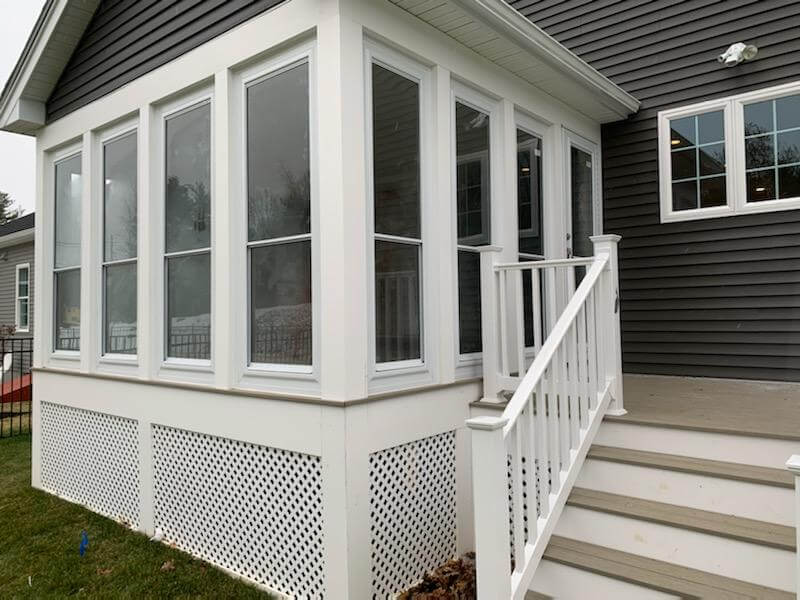
Screened porch - alternate view of the finished by Modern Architectural Glazing
4 season room and deck with three quarter windows

Key Differences Between 3-Season and 4-Season Rooms

While 3-season rooms and 4-season rooms may look similar at first glance, the way they’re designed, built, and used is quite different. Understanding these distinctions can help homeowners choose the option that best fits their lifestyle, budget, and long-term plans.

Layout and Design Features

A 4-season room is designed to function like any other interior living space. It is typically tied into the home’s main HVAC system or equipped with dedicated heating and cooling. That way, you have consistent temperature control year-round. Walls, ceilings, and floors are insulated to residential standards.

A 3-season room, by comparison, is not built for full climate control. It usually relies on natural ventilation, ceiling fans, or portable heaters rather than a permanent HVAC connection. The layout prioritizes openness and airflow over insulation, which keeps construction simpler.

Installation Costs

Because a 4-season room requires insulation, energy-efficient glass, reinforced framing, and HVAC integration, installation costs are higher. However, this investment reflects the room’s year-round usability and finished square footage value. A 3-season room is more budget-friendly since it requires fewer materials and less structural modification.

Seasons of Use

As discussed above, 3-season rooms are best enjoyed in spring, summer, and fall, but typically close down during the winter months when temperatures drop. Meanwhile, 4-season rooms remain comfortable all year, regardless of snow, ice, or heat waves, offering uninterrupted use.

Doors and Window Systems

Both room types feature expansive doors and windows, but the performance differs. 3-season rooms often use single-pane or lightly insulated glass. 4-season rooms use insulated, multi-pane glass designed to reduce heat transfer and condensation.

Frame

Generally, 4-season rooms rely on thermally engineered frames that help maintain indoor temperatures and prevent drafts. 3-season rooms use lighter framing systems, which lowers cost but limits thermal performance.

Seasonal Room Screen Repair

Seasonal rooms often feature lanai-style porches or large screened wall sections that allow fresh air to circulate while keeping insects and debris out. Because these screens are exposed to the elements year-round, they’re especially vulnerable to wear and tear. Wind, falling branches, pets, and everyday use can all lead to rips, loose screens, or sagging panels over time. When left unaddressed, even small tears can quickly grow and compromise the comfort and usability of your seasonal room.

Seasonal room screen repair typically depends on both the screen material and the type of frame supporting it. Most systems fall into one of three categories: vinyl, aluminum, or wood frames.

Vinyl and Aluminum Frames

Vinyl and aluminum-framed screens are the most common and easiest to maintain. These systems use a spline channel that holds the screen tightly in place, making repairs relatively straightforward and efficient. If the screen itself is damaged but the frame remains intact, technicians can usually replace the screening material without disturbing the surrounding structure.

Wood Frames

Wood-framed screens offer a more traditional, decorative appearance, but they require significantly more upkeep. Exposure to moisture can lead to rot, peeling paint, loose fasteners, or warping over time. Repairs may involve more than just replacing the screen, often requiring frame repairs, refinishing, or repainting to restore both function and appearance.

While DIY screen repair kits exist, improper installation can lead to uneven tension, loose edges, or recurring damage. Working with a trusted, experienced screen repair professional helps ensure the job is done efficiently, safely, and correctly the first time—saving time, frustration, and long-term repair costs.

Key Takeaways

  • 3-season rooms are a cost-effective way to enjoy spring, summer, and fall while staying protected from pests, pollen, and UV exposure, but they’re not designed for winter use.

  • 4-season rooms function as true home extensions, offering year-round comfort with insulated glass, thermally engineered frames, and heating and cooling capabilities.

  • The right option depends on how you plan to use the space, your budget, and whether year-round usability is a priority.

  • Installation complexity and cost vary significantly between 3-season and 4-season rooms due to insulation, HVAC integration, and framing requirements.

  • Screen systems play a critical role in seasonal rooms, and damaged screens can quickly reduce comfort, airflow, and protection.

  • Vinyl and aluminum screen systems are easier to maintain, while wood-framed screens require more frequent upkeep and professional attention.

  • Regular inspections and timely seasonal room screen repair help extend the life of your sunroom and prevent larger, more costly repairs.

  • Working with an experienced professional ensures proper installation, safe repairs, and long-term performance for any seasonal room investment.

Modern Architectural Glazing has been designing and developing seasonal rooms for some of the leading businesses in the area for years. We have the knowledge and expertise to craft your project to your desired specifications. Click below to learn more about everything we have to offer. Or you can follow us on Instagram to see highlights of our latest projects!
READY TO START YOUR OWN PROJECT?

Seasonal Rooms

Recent Posts
  • How to Repair Commercial Glass Doors
  • Top 6 Benefits of a Seasonal Sunroom Addition
  • Get the Most Out of Your Summer With a Screen Patio Enclosure
  • The Homeowner’s Complete Guide to Adding a Seasonal Sunroom
  • Glass Storefronts vs. Curtain Walls: A Guide for Business Owners
Categories
  • Aluminum Storefront Systems
  • Aluminum Windows
  • Architecture
  • Commercial Glass
  • Curtain Wall
  • Glass & Glazing
  • Glass Showers
  • Seasonal Rooms
ABOUT MODERN:

In 1952, Modern Manufacturing began as a storm door and window manufacturer. With the inception of Richard Uras as company President in the early 1980s, Modern expanded its focus into the growing replacement window market. Rick became the driving force behind Modern’s push into the commercial storefront and architectural restoration market, and so began Modern Architectural Glazing. Rick’s unrelenting pursuit of quality work and customer satisfaction is what continues to drive the company in the Modern Age.

CONTACT US:

Address
82 Huntoon Memorial Highway,
Rochdale, MA 01542

Phone:
508-791-7151
800-666-7151

Email:
estimating@modernglazing.com

Showroom Hours:
Monday-Friday: 8 AM – 4:30 PM

WE’RE HIRING!

We’re always looking for talented individuals to join our team!

VIEW OPEN POSITIONS
RECENT BLOGS:
  • How to Repair Commercial Glass Doors
  • Top 6 Benefits of a Seasonal Sunroom Addition
  • Get the Most Out of Your Summer With a Screen Patio Enclosure
  • The Homeowner’s Complete Guide to Adding a Seasonal Sunroom
  • Glass Storefronts vs. Curtain Walls: A Guide for Business Owners
  • How to Find the Best Glass Installation Company Near Me
Copyright © Modern Architectural Glazing, 2025
Powered by Worcester Interactive